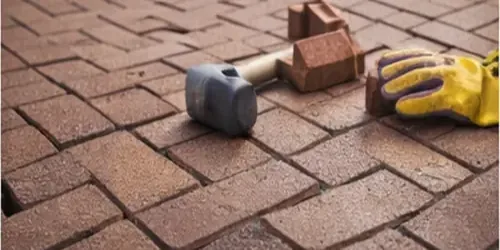
Concrete Brick
Brick Paving
Concrete brick pavers in a range of colours, sizes and laying patterns.

A base that holds up under a loaded bakkie — paving across South Africa.
What is under the paving decides how long it lasts
Paving covers surfaces built for very different loads. Through our contractor network the scope includes paving, driveways and walkways. A footpath and a driveway carrying a vehicle daily need different base depths and different compaction, and building a driveway to path specification is the commonest reason paving ruts within two years.
Setting out matters on paving as much as on tiling. Where the cut pavers land, whether the pattern runs square to the house or to the boundary, and how the laying courses meet a curve all determine whether the finished surface reads as deliberate. Cuts against the garage door or the front step are the most visible position on the whole driveway and the last place they should end up.
Impermeable paving changes where rainwater goes. A driveway replacing lawn sends water somewhere it previously soaked in, and if the falls direct it toward the house, a garage or a neighbour, the paving creates a problem it did not have before. Permeable systems, channel drains and soakaways all address it, and the decision belongs at design rather than after the first heavy storm. Older properties adding paving to previously open ground need this considered carefully.
The honest problem with pricing paving is that the expensive part is buried. Base depth, compaction and edge restraints account for the difference between a driveway that lasts fifteen years and one that ruts in two, and none of it is visible in a finished photograph or a rate per square metre. Ask for the base depth and edge detail in writing instead. Rates also differ by area. Tell us the area and what will drive on it, and we will match you with contractors covering your area.
Repairability is worth more than it appears
The most underrated property of block paving is that it can be lifted and relaid. Services run under driveways, and when a pipe or cable needs attention, pavers come up and go back down invisibly. Concrete has to be broken out and patched, and the patch is permanent and obvious. On a property where anything might need digging up later, that difference matters more than the initial cost.
Joint sand does structural work. The sand between pavers transfers load from one block to the next, which is what allows a flexible paved surface to spread a wheel load rather than concentrating it. Sand washed out by pressure cleaning or heavy rain leaves blocks working independently, and they begin to rock and settle unevenly. Re-sanding joints is genuine maintenance rather than cosmetic tidying.
Slope changes what is suitable. A steep driveway needs texture for grip when wet, which rules out smooth finishes that look excellent on a flat entrance. Falls also become more critical, because water runs faster and channels along the low side rather than spreading. Properties on sloping stands frequently need channel drains partway down as well as at the bottom, and the transition where the driveway meets the street or garage needs detailing so vehicles do not ground.
Comparing paving materials on installed cost alone misses half the picture, because the materials differ in what they cost you later. A surface that cannot be lifted for a service repair, or that stains permanently, or that needs sealing every few years, carries costs that never appear in the original quote. We publish no rates for that reason, and rates differ by area besides. Tell us the area and how it will be used, and we will match you with contractors covering your area.
Without restraint, pavers migrate outward under load
Paving spreads at its edges because nothing is holding it in. Under vehicle load the outer rows migrate outward, the pattern opens up, and joints widen progressively across the surface. A concrete haunch or purpose-made edge restraint prevents it entirely and costs very little at installation. Retrofitting one means lifting and relaying the outer rows, which costs considerably more.
Pressure washing does more harm to paving than most owners realise. High pressure strips the joint sand that holds the surface together, and once it is gone the blocks work independently, weeds establish in the empty joints, and settlement begins. Cleaning at lower pressure and re-sanding afterwards achieves the same appearance without undermining the structure.
Maintenance on paving is minor and consistently neglected. Re-sanding joints every few years, keeping weeds out before they establish roots that lift blocks, and clearing channel drains before the rainy season together take a few hours annually and prevent nearly all common paving problems. Sealing is optional and worth considering on porous materials in areas with oil spillage or heavy staining, though it needs redoing periodically and is not a substitute for maintenance.
Paving is unusual among trades in that most of its failures announce themselves early enough to be cheap. Blocks starting to rock, joints opening at the edge, or a puddle forming where none used to — each is a small repair caught then and a relay of the whole surface if ignored for two more years. We publish no rates because what is needed depends entirely on how far it has gone. Tell us what the paving is doing and we will match you with contractors covering your area.
Durable driveways and walkways in a range of materials and finishes.
Concrete brick pavers in a range of colours, sizes and laying patterns.

Decorative exposed aggregate concrete driveways and pathways.
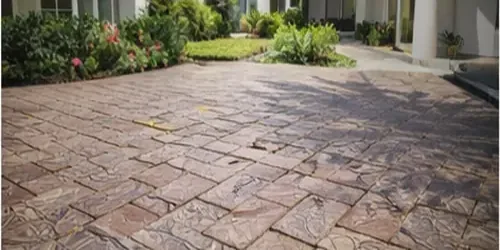
Stamped and pattern-imprinted concrete in slate, cobble and tile finishes.

Reinforced broom-finish or smooth concrete driveways and aprons.
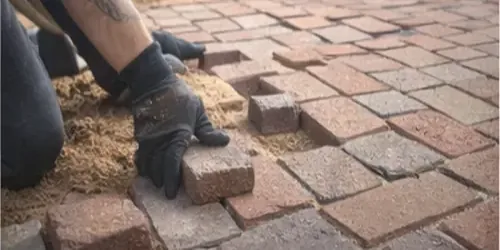
Relay sunken or cracked paving, replace damaged bricks and reinstate edge restraints.
A 150mm compacted base and correct drainage is the difference between 5 years and 20.
Your driveway takes more punishment than almost any other element of your property — vehicle loads, weather, tree roots and drainage all test it daily. A professionally laid driveway on a properly prepared base will look good and perform well for 20 years or more.
Our paving contractors dig to the correct depth, lay the right base, and finish with edge restraints that keep the whole installation locked in place.
What is under the paving decides how long it lasts. A compacted sub-base of adequate depth, correct falls away from the house, and edge restraints along both sides are what stop a driveway rutting under a vehicle and spreading at the edges. None of it is visible once the pavers are down, so it is the easiest place for a cheap quote to save money. Ask for the base depth and the edge detail in writing, and be wary of any driveway priced purely per square metre.
Find our verified contractors across all major areas and suburbs in your province.
No areas listed yet.
No areas listed yet.
Also covering
No areas listed yet.
No areas listed yet.
No areas listed yet.
No areas listed yet.