
Brick
Masonry & Brickwork
Solid brickwork, blockwork and mortar joints that stand the test of time.

Builders for the jobs too small for a developer and too big for a handyman, across South Africa.
Masonry, concrete, roofing and the trades between them
General building covers the structural trades that everything else attaches to. Through our contractor network the scope includes site preparation, excavation and earthworks, masonry and brickwork, roofing, boundary walls and structural steelwork. These are the trades where quality is invisible on handover day and obvious five years later.
Few builders are genuinely strong across every structural trade. A contractor with excellent bricklayers may subcontract roofing; another may carry roofing in-house and buy in concrete work. Neither is a problem provided you know which parts are theirs and which are not, and who carries responsibility when a junction between two trades goes wrong.
Sequence matters more in structural work than anywhere else, because each stage locks in the one before it. Foundations set out wrong cannot be corrected once walls rise; a wall plate at the wrong level affects every roof member above it. Older properties being extended or repaired add another constraint, because new structural work has to reconcile with existing work that was never set out to modern tolerances.
Structural work is the one area where a published price would do the most damage, so we publish none. The ground decides the foundation, the wall construction decides the masonry, the span decides the roof, and access decides how much of the day is spent moving material rather than building. A number that ignores all four is worse than no number. Tell us what you need built and we will put you in front of contractors covering your area.
Coursing, mortar and damp course tell you a lot
Brickwork quality is easy to assess while it is still visible. Consistent coursing, mortar joints of even thickness, walls plumb and square, and a clean damp proof course laid continuously at the right level. Once plaster goes on none of it can be checked, which is why the shell stage is worth a visit even if you trust the builder entirely.
Roof bracing is the part almost nobody inspects. Trusses need bracing to resist wind load and to stop them racking, and it is entirely possible to have a roof that looks finished from below while lacking the diagonal and runner bracing it should have. It is worth going into the roof space before ceilings go in.
Damp proof courses fail quietly. Laid at the wrong level, bridged by plaster or a paving level raised afterwards, or simply discontinued at a junction — none of it shows immediately, and the symptom appears years later as rising damp that gets misdiagnosed as a plumbing leak. Older properties frequently have DPC problems created long after construction by garden and paving changes.
We do not publish masonry or roofing prices. Wall construction, brick or block choice, roof span, pitch and covering material all move the cost substantially, and access for materials and scaffolding affects it further. Rates also differ considerably by area. Bricks, timber and roof covering are priced by the contractor for your project. Tell us what you need built and we will match you with contractors covering your area.
Retaining walls need engineering, not just bricklaying
Retaining walls are engineering rather than bricklaying, and the distinction matters. A wall holding back ground has to resist lateral pressure that increases sharply with height and rises further when the soil behind it is saturated. Above modest heights they need designing by an engineer, and a retaining wall built as though it were a boundary wall will eventually lean, crack or fail.
Drainage behind a retaining wall is not an optional extra. Without weep holes and drainage material behind it, water accumulates and adds hydrostatic pressure the wall was never designed to carry, which is the commonest cause of retaining wall failure. A quote that does not mention drainage behind the wall has left out the part that determines whether it survives.
Boundary walls fail in predictable ways. Long runs without movement joints crack as the wall expands and contracts; walls built on inadequate foundations settle differentially and crack diagonally; and walls on sloping ground need stepped foundations rather than a single level. None of these is expensive to do correctly and all are expensive to correct afterwards.
We do not publish prices for boundary walls, retaining or earthworks. Wall height, ground conditions, whether engineering design is required, drainage provision and the volume of material to move all change the figure substantially, and machine access affects it further. Rates also differ by area. Tell us what you need and we will put you in front of contractors covering your area who can assess the ground first.
Core building trades handled by experienced, verified contractors.
Solid brickwork, blockwork and mortar joints that stand the test of time.

IBR, tiled, flat and mono-pitch roofs — new installations, repairs and waterproofing.

Freestanding, retaining and privacy walls built to spec with clean capping.
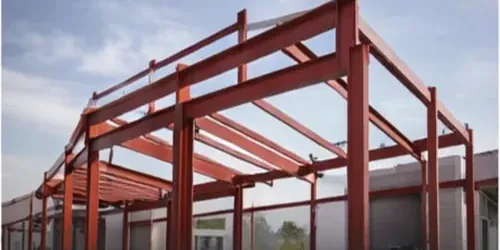
Portal frames, lintels, beams and structural connections fabricated and installed.

Covered entertainment and parking structures in brick, steel or timber.
Stop managing multiple tradesmen — one capable builder handles the whole scope.
A capable general building contractor reduces the coordination burden on you significantly. Instead of hiring separate bricklayers, roofers and concreters, a single team manages the whole build — one point of contact, one contract, one schedule.
We verify our contractors for workmanship quality, compliance and reliability before connecting them with clients.
The value of a general builder is that one person carries the programme. On a multi-trade job the expensive delays are almost never the work itself — they are the gaps, where the plasterer arrives before the electrician has finished chasing, or the tiler waits three days for a plumber. A builder who runs their own sequence absorbs that risk. Ask how many jobs they run at once, because a builder spread across five sites is effectively a co-ordinator you are paying trade rates for.
Find our verified contractors across all major areas and suburbs in your province.
No areas listed yet.
No areas listed yet.
Also covering
No areas listed yet.
No areas listed yet.
No areas listed yet.
No areas listed yet.